
Bed Bug Control: What to Do When You Find a Possible Bed Bug Away from the Bed
Finding a bug that might be a bed bug on a sofa, in a hallway, or elsewhere away from the bed can be unsettling, but one sighting does not confirm an infestation. Note the exact location and circumstances, preserve a clear photo or specimen if you can do so without spreading it, and avoid moving nearby items to another room. A pest professional can assess the evidence and determine what inspection or service may be appropriate for the property.
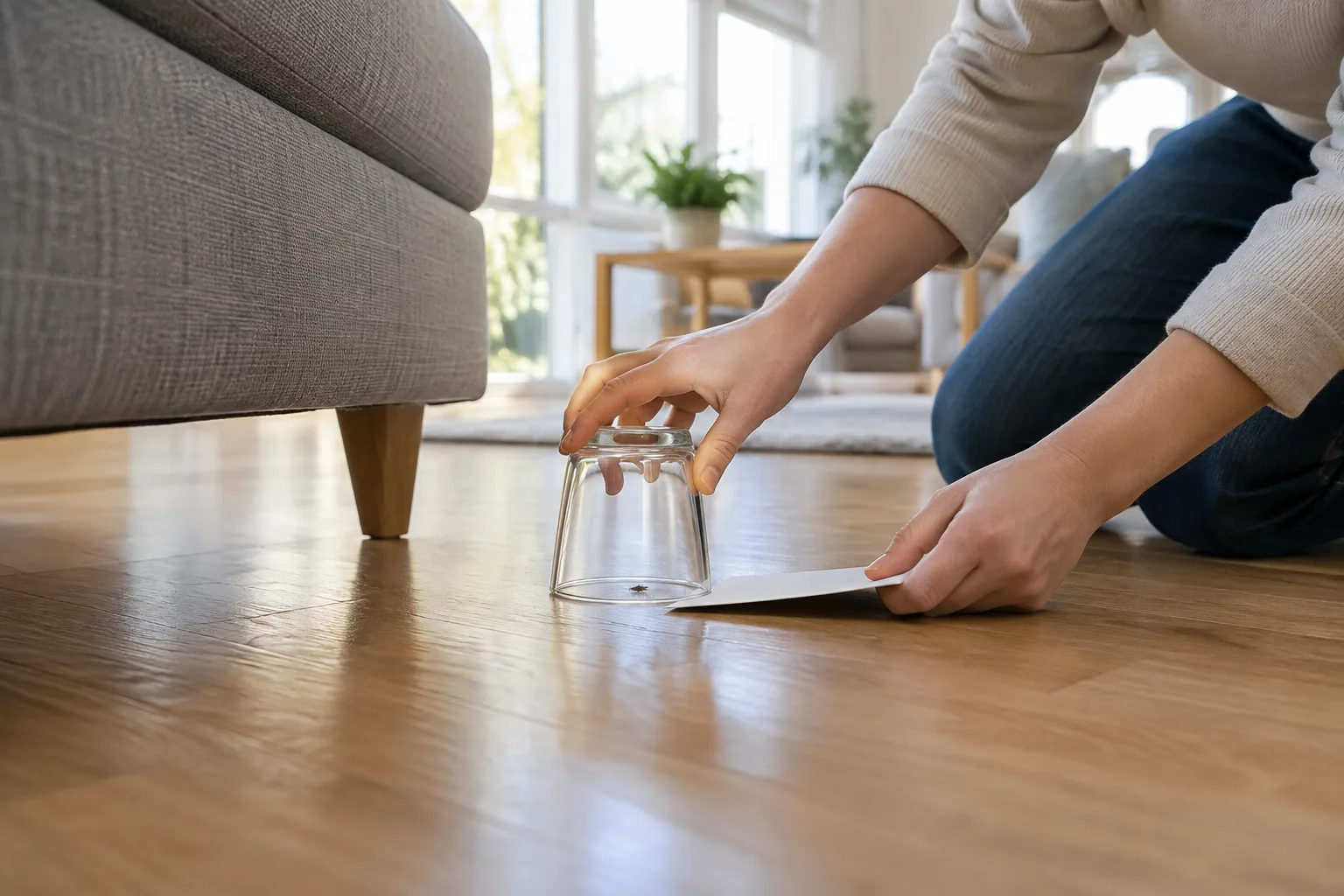
If you find a possible bed bug away from the bed, leave the surrounding area undisturbed, record exactly where and when you saw it, and take a clear photo or contain the insect without carrying it through the home. A single sighting cannot confirm an infestation, and other insects can be mistaken for bed bugs. Share the location, nearby furniture, and any other physical signs with a pest professional so they can advise whether a property-specific inspection is appropriate.
Start with the location, not a conclusion
Bed bugs are often associated with beds, but they may also hide in other places where people rest or spend time. A possible insect on a sofa, chair, curtain, or near a doorway deserves a careful note; it does not, by itself, establish where an infestation is located or whether the insect is a bed bug. Identification can be difficult, especially from a quick glance, and different insects may look similar.
Write down the room, the precise surface or nearby object, and the date and approximate time. Note what was happening just before you noticed it, such as sitting on a chair, unpacking a bag, or changing linens. These details are more useful than a broad description like “bugs in the house.” If you are unsure of the object, describe it plainly rather than guessing at a hiding place.
- Room and exact spot: for example, the seam of a living-room chair or the floor beside a suitcase.
- What you saw: whether it was moving, its general appearance, and whether you saw one insect or more.
- Other observations: any dark marks, shed skins, eggs, or additional insects nearby.
- Context: when you noticed it and whether the area or object had recently been moved.
Record observations as observations; leave identification to a closer assessment.
Document it without spreading the uncertainty
If the insect is still visible, take a close, well-lit photograph from more than one angle if practical. Include a familiar object for scale only if you can do so without touching or disturbing the insect. A photo can help someone understand what you observed, but it may not be detailed enough to confirm the species. Avoid relying on skin marks or bites as proof: they can have other causes, and some people do not react to bed bug bites.
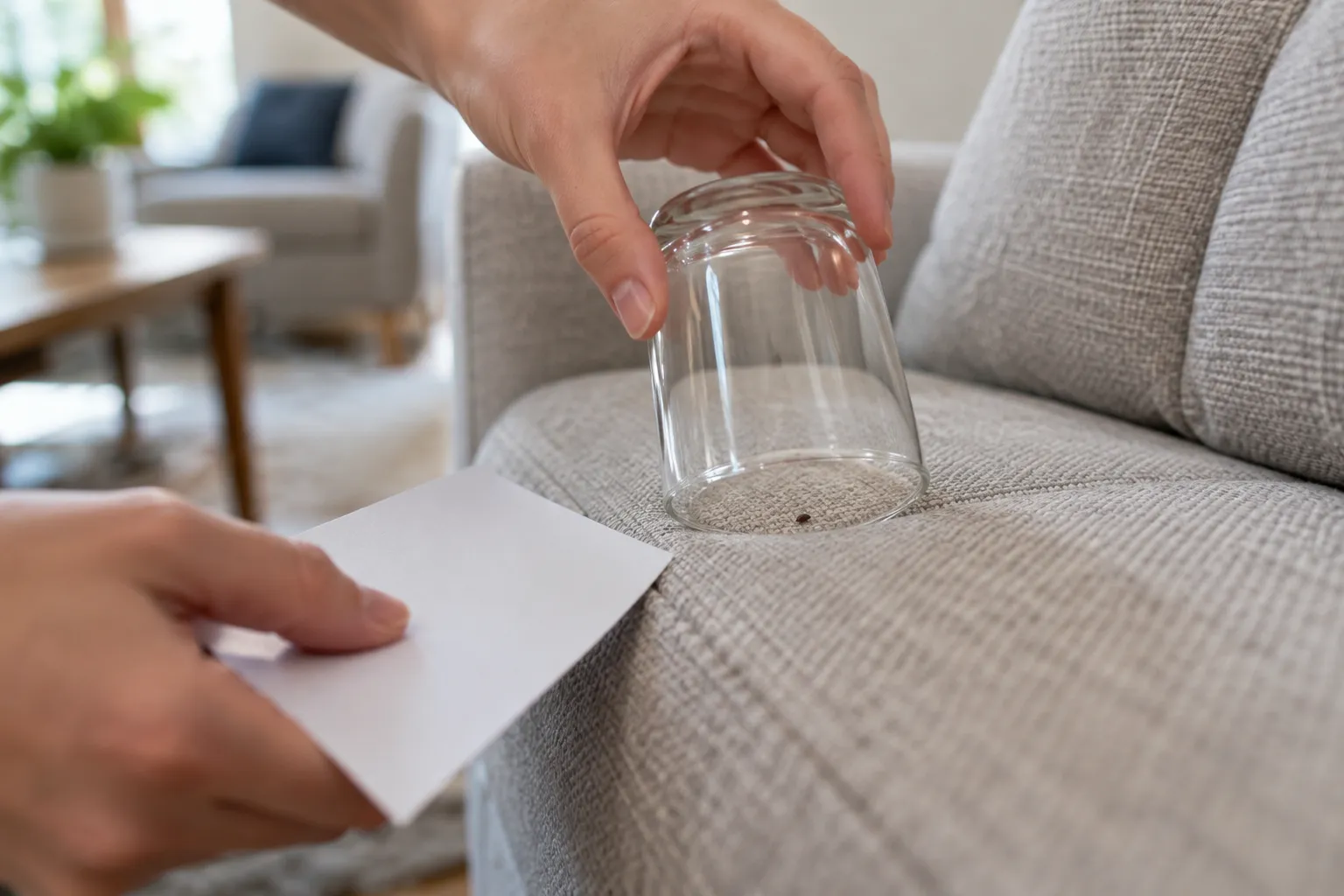
If you can safely capture the insect without crushing it or carrying it loose through the home, place it in a sealed, clear container or bag and label where and when it was found. If that would mean handling it, reaching into a crack, or disturbing furniture, do not force it. A photo and a precise location note are still useful. Do not take a suspected insect or potentially affected belongings to another room, another home, or a shared laundry area just to show someone.
- Pause and keep people, pets, and loose belongings from disturbing the immediate spot.
- Photograph the insect and the surface where it was found, if visible.
- Record the room, exact location, date, and any nearby signs.
- If capture is simple and contained, seal and label the specimen; otherwise leave it and share the photo.
- Ask a pest professional what inspection details or next steps fit the property.
A useful record is specific and contained; extensive searching or moving items is not required to make a service request.
Look for a pattern, but avoid turning a search into a disturbance
A professional assessment may consider more than the place where the insect was first noticed. Bed bugs can hide in narrow spaces and in furniture away from a bed, so the location of one sighting is not necessarily the full picture. If you notice additional signs during ordinary use of the room, record where they are rather than pulling apart furniture or opening electrical fixtures. Do not scrape, dismantle, or reach into areas you cannot inspect comfortably.
Keep observations separate by room and object. For example, “one small insect on the sofa seam on Tuesday evening” is clearer than “the whole apartment is infested.” If another person in the household reports a sighting, note their location and approximate date too. A simple timeline can help a provider decide which areas to discuss or inspect, without assuming that sightings in different places have the same cause.
| Useful detail | Why it helps |
|---|---|
| Exact room and surface | Connects the observation to a specific area for discussion. |
| Date and approximate time | Helps distinguish a new sighting from an older report. |
| Photo or contained specimen | Provides something to review, while still allowing identification to remain uncertain. |
| Other signs and their locations | Shows whether there are separate observations to consider. |
A pattern is a record of separate observations, not a diagnosis.
What to share when requesting an assessment
When contacting a pest professional, describe what you saw and where, rather than opening with a definite diagnosis. Mention whether the insect is available in a photo or sealed container, whether you have noticed other signs, and which rooms or furnishings are involved. If you rent or live in a multi-unit building, consider notifying the property manager as appropriate and ask how observations should be coordinated. Avoid moving furniture or belongings between units or rooms while the situation is being assessed.
Ask what the proposed inspection would cover, whether you should make particular areas accessible, and what preparation—if any—is appropriate before a visit. Preparation depends on the property and the service being considered, so do not assume that one set of instructions applies everywhere. Multi Pest offers bed bug control and Heat Assault bed bug heat treatment; suitability and preparation are confirmed for each property. You can review the company’s bed bug control service information and [service areas](https://multipestnewyork.com/service-areas.html) when deciding what to ask.
- Where exactly was the insect found, and what was it on?
- What evidence can I share, and is it enough to identify the insect?
- Which areas should be considered during an inspection?
- What should I leave in place, and what preparation is actually needed?
- If treatment is recommended, what does the proposed scope include?
Ask for property-specific guidance before preparing rooms or moving belongings.
Common questions
Does finding one bug away from the bed confirm bed bugs?
No. One insect away from the bed does not establish its identity or confirm an infestation. Other insects can be mistaken for bed bugs, and a photo may not show enough detail for a reliable identification. Record the exact location and any other physical signs, then ask a pest professional whether an inspection is appropriate. Avoid treating bites or a single uncertain sighting as proof.
Should I move the furniture or belongings to check?
Usually, it is more useful to document what is visible than to move items around. Moving a suspected item can disturb the area or carry an insect elsewhere, and extensive searching may not clarify the situation. Note the furniture or object, take a photo if possible, and ask the provider what areas should be accessible. Follow preparation instructions tailored to the property and proposed service.