
Cockroach Control in Multi-Unit Buildings: What Should Tenants and Managers Coordinate?
A practical guide for tenants and property managers coordinating cockroach control in a multi-unit building: what to report, how to arrange access, which building conditions to flag, and what to clarify before and after a service visit.

Tenants and managers should coordinate by sharing specific sighting details, arranging access to affected and nearby areas, and reporting conditions such as leaks, gaps, or food and waste concerns. Before a visit, confirm preparation and access instructions with the pest professional. Afterward, keep a shared record of activity and any building repairs or follow-up requested. The right plan depends on the property and inspection.
Start with a shared record of activity
A useful report is more specific than “there are roaches.” Note which room or area is affected, when activity was seen, how often it occurs, and whether sightings are near a sink, appliance, cabinet, doorway, or shared service area. If you notice droppings, shed skins, or egg cases, describe where they appeared. These observations can help guide an inspection, but they do not by themselves confirm the source or extent of activity.
Tenants can send the information to the property manager or the designated building contact, using the building’s usual reporting process. Managers can keep a dated log that connects reports to units or common areas without treating a single sighting as proof that a particular apartment caused the issue. If activity appears in more than one location, record each location separately. A simple, consistent record helps the professional understand patterns and helps the building coordinate access and any needed maintenance.
- Record the date, approximate time, room, and exact area where activity was noticed.
- Mention nearby water, food storage, waste, or visible gaps, without assuming the cause.
- Note any products or prior treatments used and when they were applied, if known.
Coordinate access without guessing the treatment
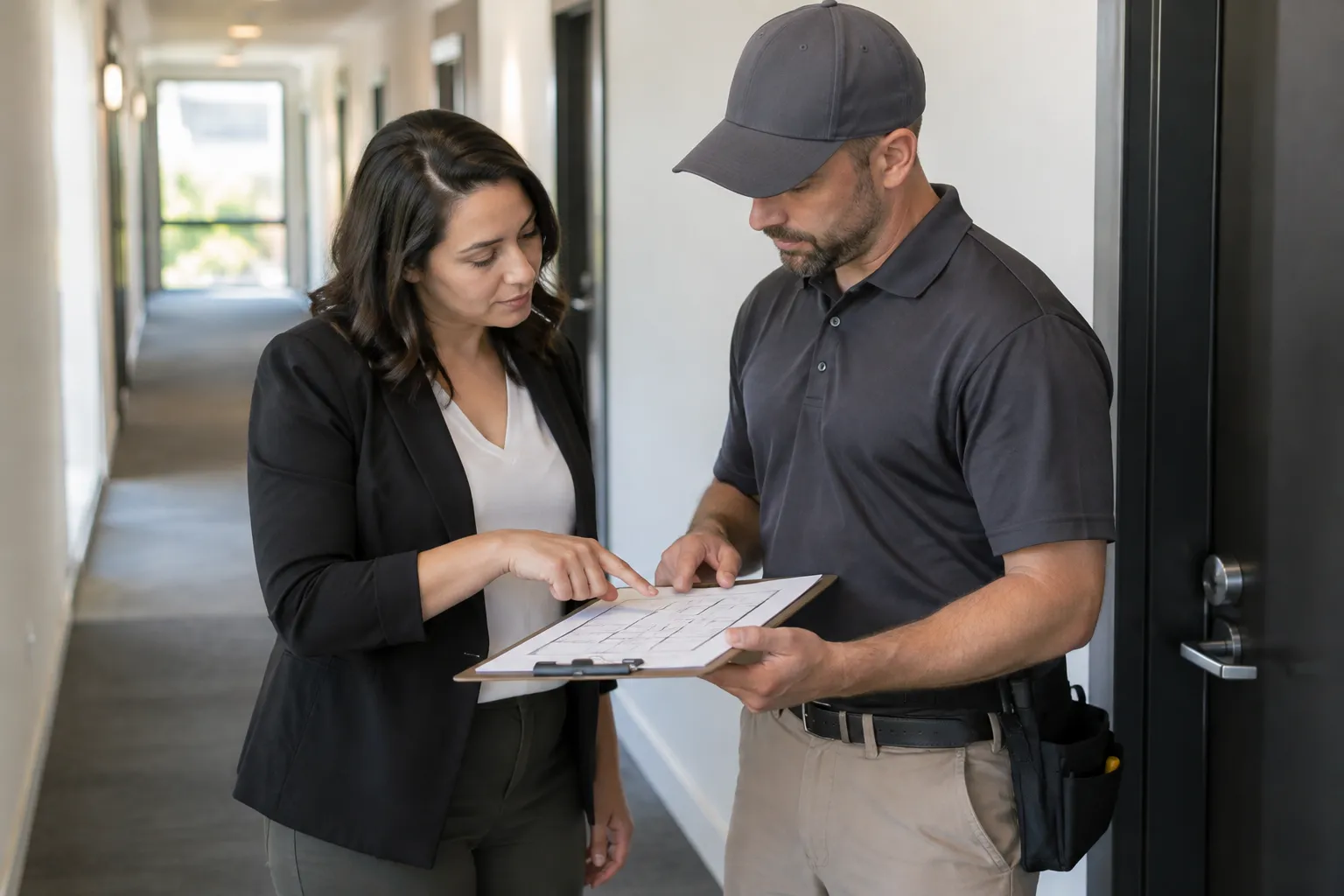
In a multi-unit property, access planning is a practical part of the response. The manager should identify which apartments, common areas, or service spaces may need to be inspected, then arrange entry through the building’s established process. Tenants can say when they are available and flag access constraints early. If a neighboring unit or shared area may be relevant, report that possibility to management rather than trying to inspect another person’s space.
Before the appointment, ask the pest professional which areas need to be accessible and what preparation is appropriate for the proposed approach. Instructions can vary by property and treatment, so avoid relying on a generic checklist or moving heavy appliances without guidance. A manager can help communicate the same confirmed instructions to everyone who needs them. For service-specific information, review cockroach control and inspection details, then confirm the plan for the actual building with the provider.
- Choose one building contact to collect reports and coordinate scheduling.
- Confirm the visit scope, entry arrangements, and preparation instructions with the provider.
- Share relevant instructions with affected residents and confirm which areas will be accessible.
Connect pest reports with building conditions
Cockroach activity can be associated with access routes and available food or water, but a report alone cannot establish why insects are present or where they originated. Tenants should report observable conditions such as a leak, standing water, damaged seal, or gap around a pipe to the manager. Managers can route those observations to the appropriate maintenance person and share relevant findings with the pest professional. Repairs and pest service may need to be coordinated rather than handled as unrelated tasks.
Keep the division of responsibilities clear: residents report what they see and follow confirmed preparation instructions; management coordinates building access and maintenance; the pest professional assesses the pest concern and explains suitable service options. Do not assume that treating one visible spot addresses every contributing condition. In New York City, building-specific obligations may apply, so managers and tenants should check the rules relevant to their property rather than treating this general article as a legal determination.
- Report leaks, moisture, or water that remains around sinks and plumbing.
- Describe visible gaps or damaged surfaces; leave repairs to the responsible maintenance person.
- Tell the provider about shared spaces or repeated activity in different locations.
Agree on follow-up and keep expectations realistic
Before work begins, ask what signs should be monitored afterward, how residents should report continued activity, and whether another visit or building repair may be considered. Record the answer and the date, then use the same reporting channel for new observations. If activity continues, share where and when it was noticed and whether the location differs from the original report. That information can help the provider decide what to review next.
For example, imagine a tenant reports sightings beside a kitchen sink on several evenings, while a manager separately notes a leak in a nearby shared area. Those are illustrative observations, not proof that the leak caused the sightings. The manager can arrange access, report the leak for maintenance, and pass both details to the pest professional. The professional can then assess the property and explain appropriate next steps. Results vary with the building, conditions, and service plan, so avoid assuming a particular visit will resolve every report.
The most useful coordination is a clear record, agreed access, prompt reporting of building conditions, and a defined follow-up channel. Ask the provider what applies to the specific property.
Common questions
Should a tenant contact the manager first?
Use the building’s normal reporting process and tell the manager where and when activity was seen. If you already have a scheduled service contact, ask how reports should be shared so the manager and provider receive consistent details. Include any visible leak, gap, or prior treatment you know about, but do not assume the source. Management can coordinate access and maintenance, while the pest professional can assess the pest concern and explain the next step for that property.
What should the manager ask the provider?
Ask which areas need inspection or access, what preparation is appropriate for the proposed service, how residents should report further sightings, and whether any building conditions should be addressed. Clarify who will communicate instructions and how follow-up will be recorded. The answers depend on the property and inspection; a general article cannot determine the treatment or access needs for a particular building.