
Flies Around Indoor Plants: When to Request a Professional Assessment
Learn how to tell whether small flies are mainly associated with a potted plant or appear in other parts of the home, what observations can help clarify the pattern, and when to ask a fly-control professional for an assessment. A plant-side observation is useful, but it does not by itself identify the insect or confirm its source.
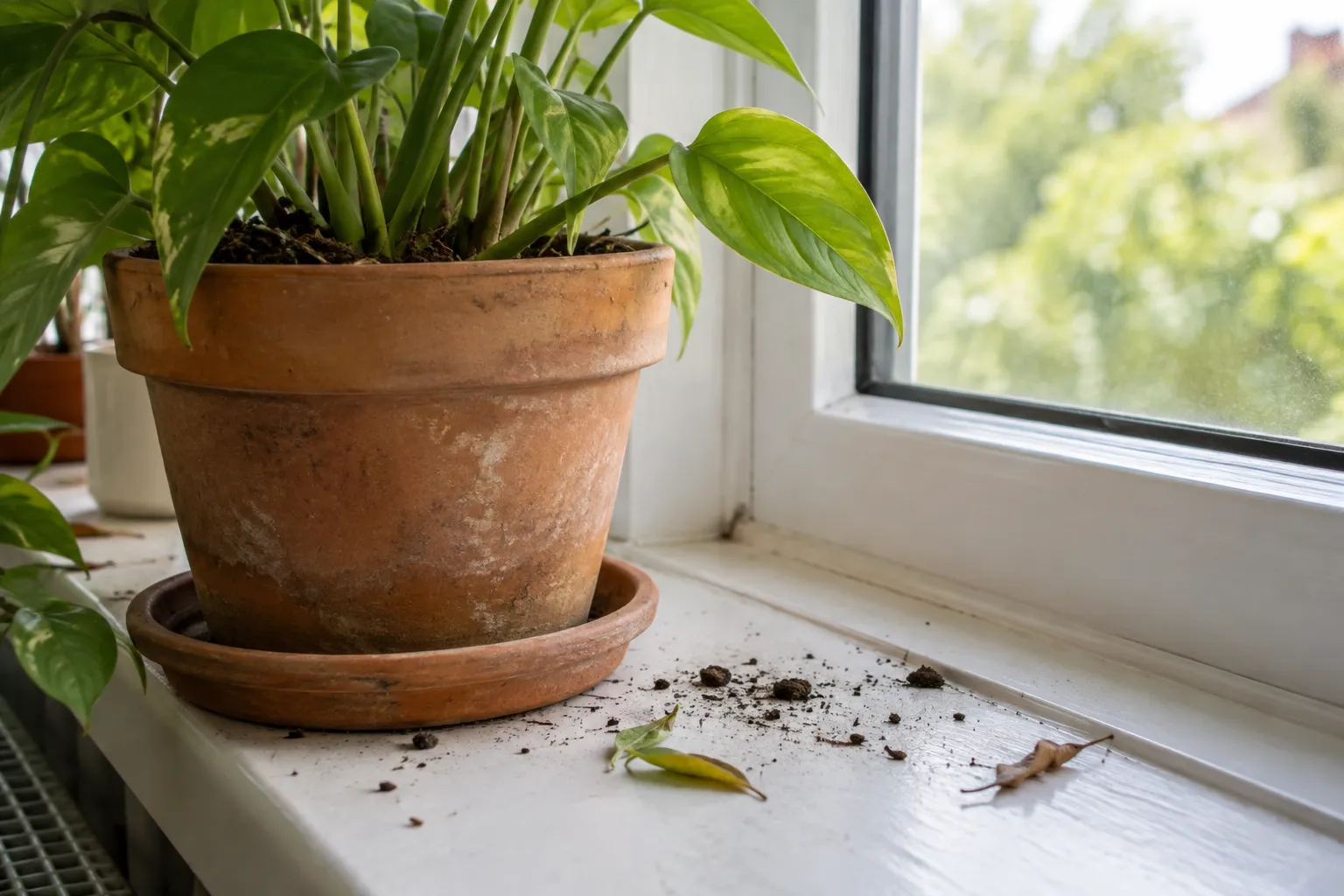
If flies keep appearing around indoor plants, request a professional assessment when activity persists, spreads beyond the plants, or you cannot identify where it is coming from. Small flies near damp potting mix may be associated with the plant, but appearance alone cannot confirm the insect or source. Note where and when you see them, whether other areas are affected, and any changes in the plant or soil. Share those observations when asking about fly control; an inspection can help determine what is relevant to your property.
Start with location, not a guess
A cluster of small flies near a pot is a useful clue, not a diagnosis. Some small flies can be associated with moist potting mix and decomposing organic material, while other indoor flies may be connected to different sources. A person may also notice insects near a window because of light, even when the source is elsewhere. Size and color can be hard to judge, especially when an insect is moving, so avoid relying on a quick glance to name it.
Observe the pattern without disturbing the plant or trying to expose hidden areas. Are the flies mostly resting on the soil, pot rim, foliage, or nearby window? Do you see them only in one room, or also near a sink, food, recycling, waste, or an entrance? These details help distinguish a plant-associated pattern from activity that appears in several places. They do not prove a source, but they give a professional a clearer starting point.
- Record the room and the exact area where flies are most noticeable.
- Describe whether they appear to stay near one plant or occur elsewhere too.
- Note visible conditions such as persistently damp-looking soil or fallen leaves, without treating these observations as proof.
A plant may be part of the pattern, but location alone cannot confirm the source.
Look for a pattern over time
A brief observation can be misleading: a few flies may be passing through, while repeated activity in the same area deserves closer attention. Make a simple note when you notice them, including the room, nearby plant or fixture, and whether the activity is occasional or recurring. If you see flies in more than one area, record each location separately rather than assuming they share a source. This is a focused record, not a need to count every insect.
You can also note what has changed around the plant or room, such as a recent move, new plant, watering change, or a period when the potting mix seems to stay wet. These details are context, not a test for a pest. Plant symptoms such as yellowing or wilting can have many causes, including watering and drainage conditions, so they should not be treated as proof that flies are damaging a plant. Avoid making a major care change based only on insect sightings; consider the plant’s own needs.
- Write down when you notice activity and where it is concentrated.
- Note whether the same pattern returns and whether other rooms or nearby areas are involved.
- Keep a short description of relevant changes, such as a new plant or a shift in watering.
A few consistent notes are more useful than a confident guess about the insect.
When a professional assessment makes sense
Consider asking for an assessment if flies continue to return after you have noticed and addressed ordinary plant-care conditions, if activity is increasing or appearing in several areas, or if you cannot tell whether the plants are related. A professional can consider the insect’s appearance, where it is found, and possible breeding areas or access points. The assessment may identify a different source than the one first suspected; the appropriate next step depends on what is found at the property.
A service visit is not automatically necessary for every fly near a houseplant. If you have seen only an occasional insect and the activity is limited to one pot, you may first keep observing and note the conditions. If the pattern persists, is disruptive, or extends beyond the plant area, a conversation with a provider can help clarify whether an inspection is appropriate. For information about the company’s fly-control service and the kinds of observations that can guide an inspection, see the fly control service information. Any assessment is property-specific; this article cannot identify an insect or replace an inspection.
- Activity keeps returning or becomes more noticeable.
- Flies appear away from the plants, or in multiple rooms.
- You are unsure whether the plant, a nearby fixture, or another area is relevant.
- You want help identifying the fly and considering possible sources.
Persistence, spread, or uncertainty are practical reasons to ask whether an assessment is appropriate.
What to share when you reach out
Give a concise description rather than a diagnosis: say that you are seeing small flies near indoor plants, explain which rooms are affected, and describe whether activity is limited to the pots or also occurs near other features. Mention how long you have noticed the pattern and whether it seems occasional or recurring. If you are unsure about size or appearance, say so; a clear description of location and behavior is still useful.
For example, imagine someone notices small flies around one plant by a bright window, then sees similar activity near a kitchen sink on several later occasions. That illustrative pattern does not establish that the plant or sink is the source. It does give the person two locations and a recurring observation to share, so the provider can ask relevant follow-up questions. If you rent or manage a property, you can also note which rooms are affected and coordinate access to the areas that may need to be viewed. Do not move heavy items or disturb the plant to prepare; simply explain what you can already observe.
- Describe the fly as best you can, without assuming its species.
- List the affected rooms and the places where activity is most noticeable.
- Explain whether the activity is occasional, recurring, or appearing in new areas.
- Mention relevant plant or room changes and ask what areas may need to be accessible.
Share observations and uncertainty plainly; the provider can determine what information is needed next.

Common questions
Do flies near a plant prove the plant is the source?
No. The location is a useful clue, but it does not confirm the insect or where it originated. Some small flies are associated with moist potting mix, while other flies may have different sources. Note whether activity stays near the plant or also appears elsewhere, and share that pattern if you request an assessment.
When should I stop observing and ask about fly control?
Consider contacting a provider when activity keeps returning, becomes more noticeable, appears in multiple areas, or remains difficult to identify. If you have seen only an occasional fly near one plant, brief observation may help clarify the pattern. The right next step depends on what is happening at your property, so an article cannot determine whether treatment is needed.