
Stinging Pest Control: What to Note Before a Property Inspection
A practical guide to recording where stinging insects appear, when activity occurs, and which parts of a property are affected. These observations can help a pest control provider discuss inspection access and possible next steps, but they do not identify an insect or confirm a nest.
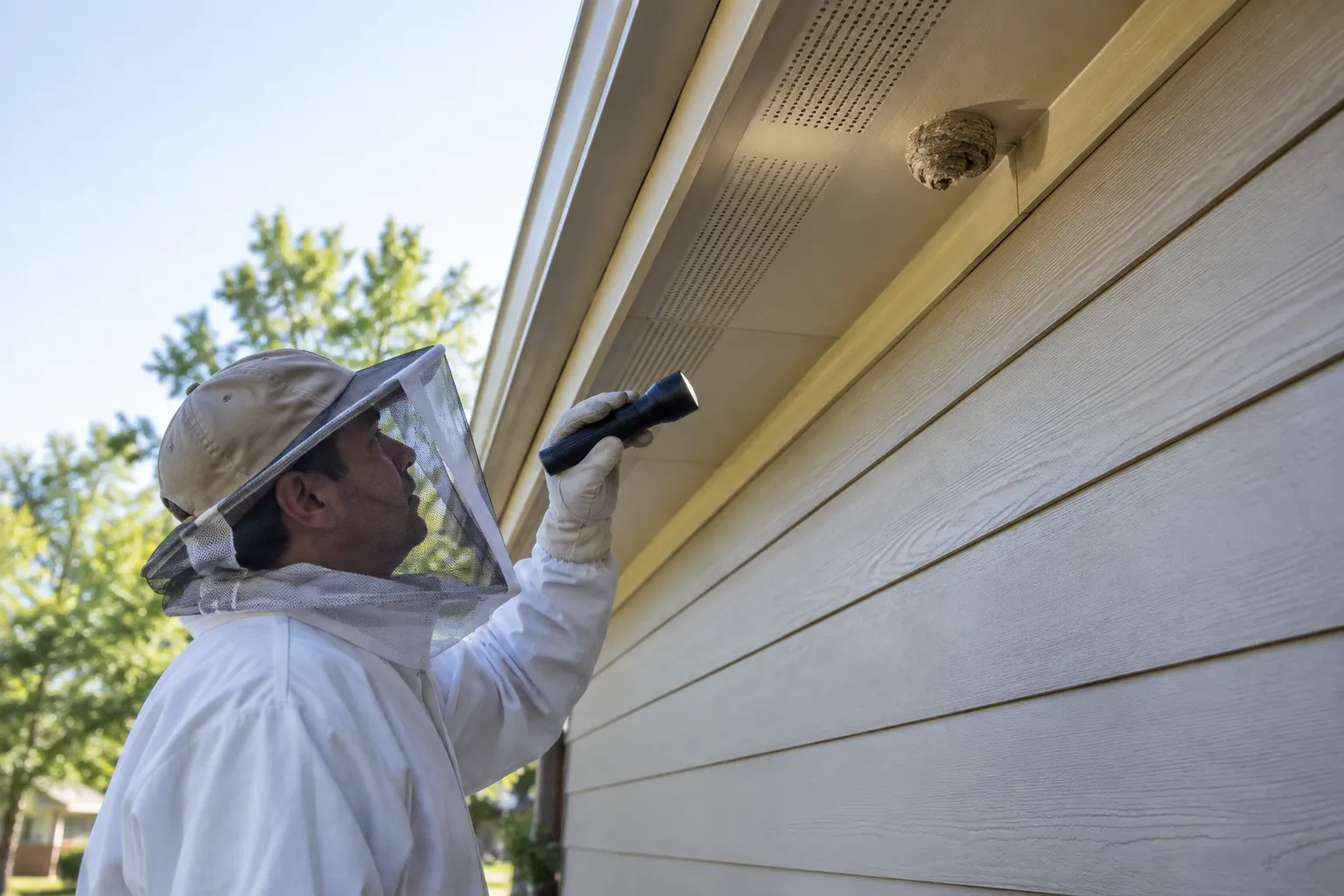
Before a stinging pest inspection, note where you see insects, what they appear to be doing, when activity occurs, and whether the area is near a doorway, walkway, or occupied space. Record observations from a safe distance; do not approach, touch, block, or disturb a suspected nest to get a better look. Share the property location and any access concerns with the provider. These details can guide a discussion about inspection needs, but they cannot confirm the insect species, nest location, or appropriate service. Keep people and pets away from the area while you arrange a next step.
Record the location and pattern
Start with the exact part of the property where activity is visible: for example, near an eave, a wall opening, a shrub, a deck, or a patch of ground. Describe the location in ordinary terms rather than trying to name the insect or nest. If you can observe safely from indoors or another comfortable distance, note whether insects repeatedly enter or leave one opening, gather around a sheltered spot, or simply pass through the area. A single sighting and repeated traffic are different observations, but neither proves that a nest is present.
Add the time and circumstances when you notice activity. You might record whether sightings happen during a particular part of the day, after outdoor food is set out, or when people use a doorway or patio. Keep the notes factual: “several insects near the side entrance around lunchtime” is more useful than “a dangerous nest by the door” if you have not confirmed what is there. If activity changes, note that too. A short written log can help you describe a pattern without returning to the area to investigate.
- Where activity appears, using a nearby landmark or room name.
- Whether insects seem to enter the same opening or sheltered area.
- When you noticed them and whether the pattern has changed.
- Nearby doors, walkways, seating areas, or other frequently used spaces.
Describe what you observed, not what you assume is hidden there.
Describe access and affected areas
When contacting a provider, keep the description concise and specific. Multi Pest’s stinging pest service information asks customers to describe activity and location from a safe distance, and notes that an inspection helps assess the insect and access involved. You can review the [stinging pest control service](https://multipestnewyork.com/stinging.html) and ask what information would help clarify the next step. If you are requesting an estimate, include the property type, the area where activity occurs, and any access limitations you already know about. Avoid sending yourself back to collect details that would require approaching the insects.
- Write down the location and what you observed without assigning a species.
- Note nearby entrances, walkways, occupied spaces, and access limitations.
- Keep the area undisturbed and explain the situation when you contact a provider.
- Ask what inspection access or preparation may be needed before a visit.
Useful notes explain both the activity and the setting around it.
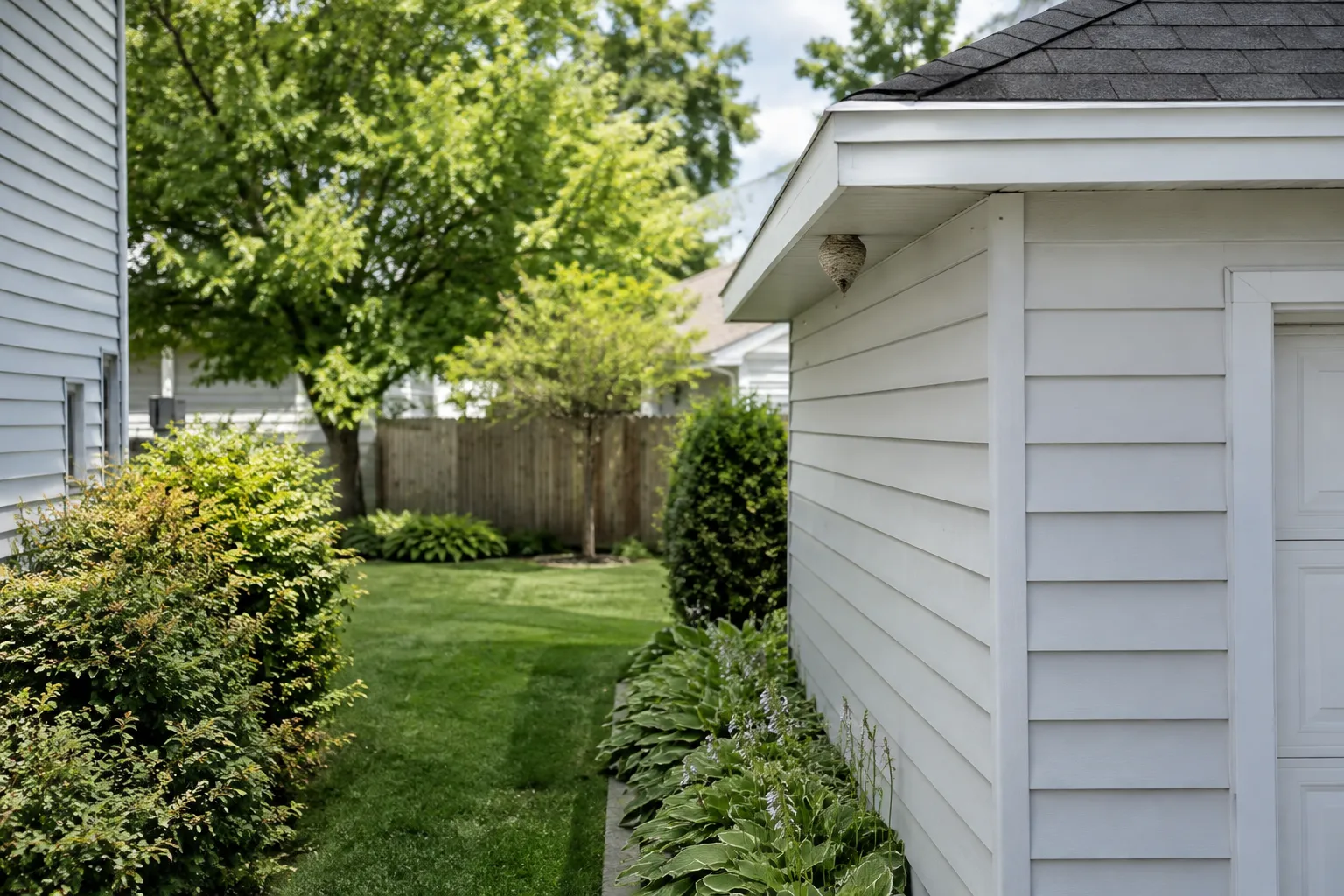
Keep the observation safe and limited
Do not touch, knock down, seal, spray, or otherwise disturb a suspected nest to confirm what it is. Avoid standing beneath it, blocking an opening, or asking someone else to get closer for a photograph. If you already have a picture taken from a safe place, you can ask whether it is useful, but a photo may not show enough detail to identify the insect or determine where a nest extends. A provider may need to inspect the property directly before discussing suitable options.
For now, keep people and pets away from the immediate area and use another route if one is available without passing close to the activity. If insects are near an entrance, tell household members, tenants, or staff which route to avoid. Do not set out food or drinks in the affected spot while waiting, and keep outdoor refuse closed where practical. These are general ways to reduce avoidable contact, not a substitute for an inspection or a promise that activity will stop. If the situation changes, update your notes and tell the provider.
- Do not approach or disturb the suspected nest.
- Keep people and pets away from the immediate area.
- Use a different route if it avoids passing near the activity.
- Share new observations rather than returning to investigate.
The goal is to report the situation without creating a closer encounter.
What to ask before the inspection
Once you have described the location and activity, ask practical questions about the next step. For example: Which areas should be accessible? Should anyone avoid a particular entrance while the inspection is being arranged? Is there anything you should leave untouched? What information would help the provider understand the property layout? These questions help set expectations without assuming that every property needs the same inspection or service. The appropriate approach depends on what is found and the conditions at the site.
If you manage a multi-unit property or business, identify who can provide access and who should receive updates. Share the location in terms that another person can find, such as “the rear stairwell door” or “the outside wall beside the loading entrance.” Avoid circulating an unconfirmed identification as fact; say “suspected stinging insect activity” until it has been assessed. After the inspection, ask the provider to explain what was observed, what service options are being proposed, and whether any preparation or follow-up is recommended. Results and next steps vary with the insect, its location, and property conditions.
- Confirm how to arrange access to the affected area.
- Ask what people should avoid while waiting for the inspection.
- Request an explanation of observations and proposed next steps.
- For shared properties, agree who will coordinate access and updates.
A clear description supports a useful conversation; the inspection determines what can be concluded.
Common questions
Can my notes identify the insect?
No. Notes about location, timing, and movement help describe what you observed, but similar-looking insects or an obscured nest can make identification uncertain. Avoid approaching to look for distinguishing features. Share your observations with the provider and ask whether an inspection is needed to assess the insect and its location.
Should I take a closer photo?
Do not move closer to a suspected nest or enter an area where you feel at risk just to take a photograph. If you already have an image made from a safe distance, you can ask the provider whether it is useful. A photo may not show the full nest or establish what service is appropriate, so describe the location and activity as well.