
Termite Control: What Changes in a Home Should Prompt a Closer Look?
Learn which changes in wood, paint, and indoor conditions may be worth documenting, why a single clue cannot confirm termites, and what to share when requesting a professional inspection.
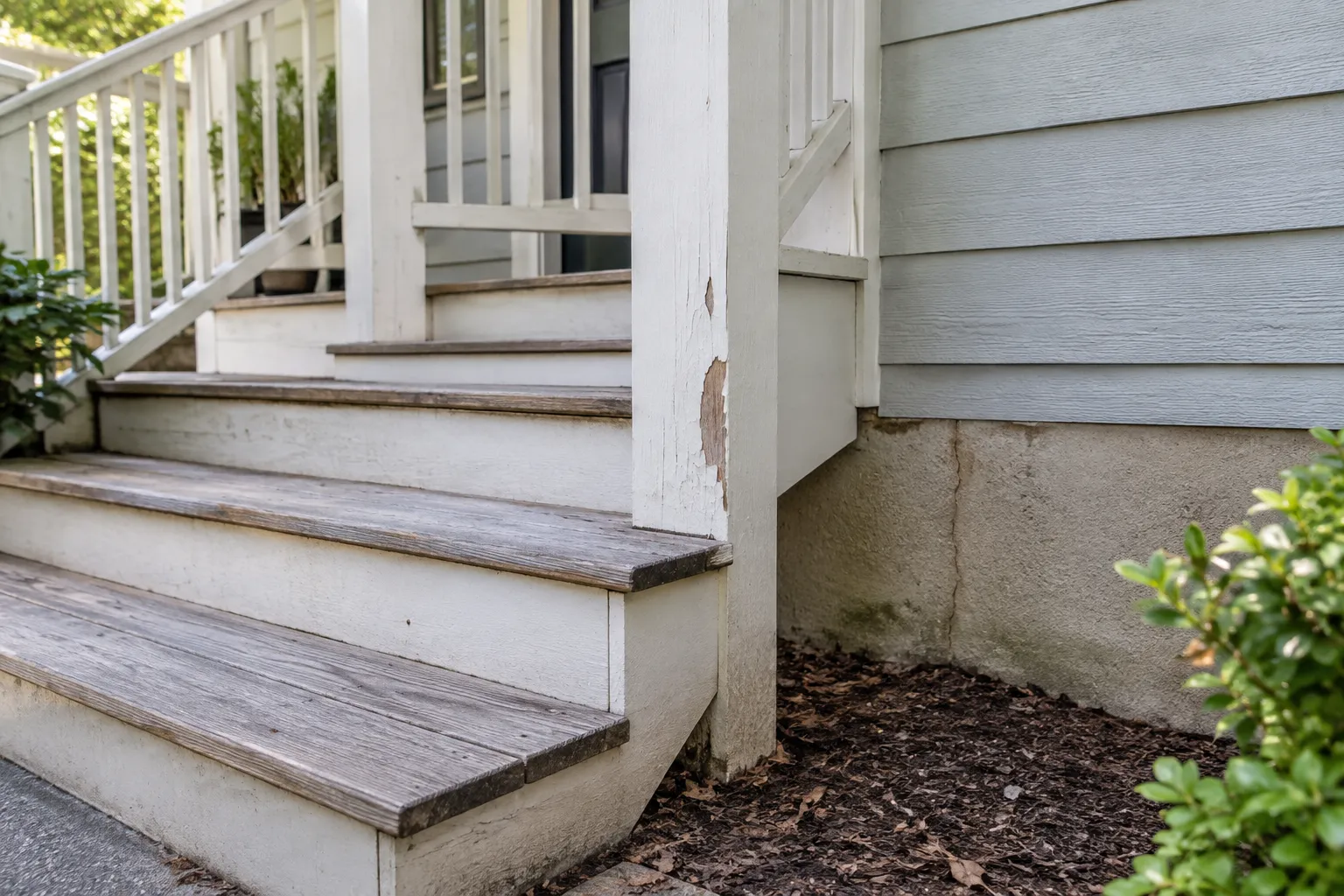
Changes in wood or nearby surfaces can be a reason to take a closer look, but no single mark confirms termite activity. Note what changed, where it is, and whether it appears to be changing further. If you see several related clues, recurring changes, or damage in an area you cannot assess, contact a pest professional to discuss an inspection. Avoid probing or removing material; an article cannot identify the cause or establish whether activity is current.
Which changes are worth noting?
Pay attention to changes rather than trying to diagnose a pest from appearance alone. Wood that seems newly damaged, a surface that has changed shape, or paint that is newly blistered or uneven may deserve a closer look, particularly when the change is near wood or a place with recurring dampness. These observations have many possible explanations, including ordinary wear, moisture, or other building conditions. They are clues to describe, not proof of termites.
Look at the surrounding area without moving heavy objects or disturbing the surface. Note whether the change is on a window or door frame, baseboard, floor edge, or another visible wooden feature. Record whether the area is dry or damp to the touch only if that is readily apparent; do not open walls, lift flooring, or scrape paint to investigate. If you notice small discarded wings or material that resembles pellets or soil, describe what you see without assuming what it is.
- Write down the room and the closest visible feature, such as a frame or baseboard.
- Describe the appearance in plain terms: for example, “paint looks raised” rather than “termite damage.”
- Note when you first noticed it and whether it looks different on a later, ordinary visual check.
- Take a clear photo from the same general angle if it can be done without disturbing the area.
A useful observation is specific and neutral: what changed, where, and when.
Why one clue cannot settle the question
Many household changes overlap in appearance. Peeling paint, soft-looking trim, cracks, or a door that no longer closes smoothly can have causes unrelated to termites. Moisture, aging materials, movement, and routine wear may also affect surfaces. Conversely, the absence of an obvious mark does not establish that a concealed area has been checked. A visual description can help a professional decide what to examine, but it cannot identify the cause by itself.
The pattern and context matter. A single old-looking mark that has not changed is different from several new observations appearing in nearby places, but neither pattern proves current activity. Consider whether the change is recent, whether it is recurring, and whether other visible clues are close by. Do not use a home test, online photo comparison, or an informal guess as a substitute for an inspection when the concern persists. The appropriate next step depends on the property and what an inspection finds.
| Observation | What it can tell you | What it cannot confirm |
|---|---|---|
| One patch of uneven paint | A surface has changed and may merit a note | That termites caused it |
| A change that appears to recur or spread | The condition may be worth describing promptly | Whether activity is current or what treatment is appropriate |
| A mark that looks old and unchanged | The visible condition seems stable between checks | That there is no concealed issue |
Treat comparisons as a way to organize observations, not as a diagnostic test.
What to record before contacting a professional
A short, organized description can make an initial conversation more useful. Include the property type, the room or area, the feature involved, and when you first noticed the change. If you have observed it more than once, say what looks different rather than estimating a cause. Mention any nearby conditions you have already noticed, such as recurring dampness, while keeping separate what you saw from what you suspect.
For example, imagine a homeowner notices a new-looking patch on a basement door frame and later sees that the paint appears more raised. A helpful note would be: “Basement door frame, first noticed last week; paint looked more raised on a later check; no material removed.” This is an illustrative example, not a diagnosis or a report of a customer property. It gives a provider a location and a change to discuss without claiming termites are present.
- Where is the change, and what visible feature is affected?
- When did you first notice it? Has it appeared different since then?
- Are there other observations nearby, such as discarded wings or a recurring damp area?
- Can you share a photo taken without touching, opening, or scraping the surface?
- Is the property shared, rented, or managed? If so, who should coordinate access?
Keep the record factual; leave identification and interpretation to an inspection.
When to request an inspection and what happens next
Consider contacting a pest professional when a change is recurring, appears to be progressing, occurs alongside other possible clues, or involves an area you cannot reasonably assess. You do not need to prove termites are present before asking what an inspection would involve. If the observation is minor and unchanged, you can still document it and ask for guidance if uncertainty remains. The timing and scope of an inspection depend on the property and the information available.
When you reach out, describe the observations and ask which areas may need to be examined, whether anything should be made accessible, and what the proposed next step would cover. A provider can explain what can and cannot be concluded from the inspection and whether further evaluation is appropriate. If you are a tenant, coordinate with the property owner or manager about access and reporting. Multi Pest provides residential and commercial pest control across Long Island and New York City’s five boroughs; its termite control information can help you identify the relevant service, while the property-specific assessment determines what applies.
- Describe the location and visible change without labeling it as termite damage.
- Share when you noticed it, whether it changed, and any nearby observations.
- Ask what the inspection can assess and what access or preparation is relevant.
- Review the proposed scope and next steps for your property before deciding how to proceed.
An inspection is the practical way to assess uncertain signs; observations alone cannot establish cause or current activity.
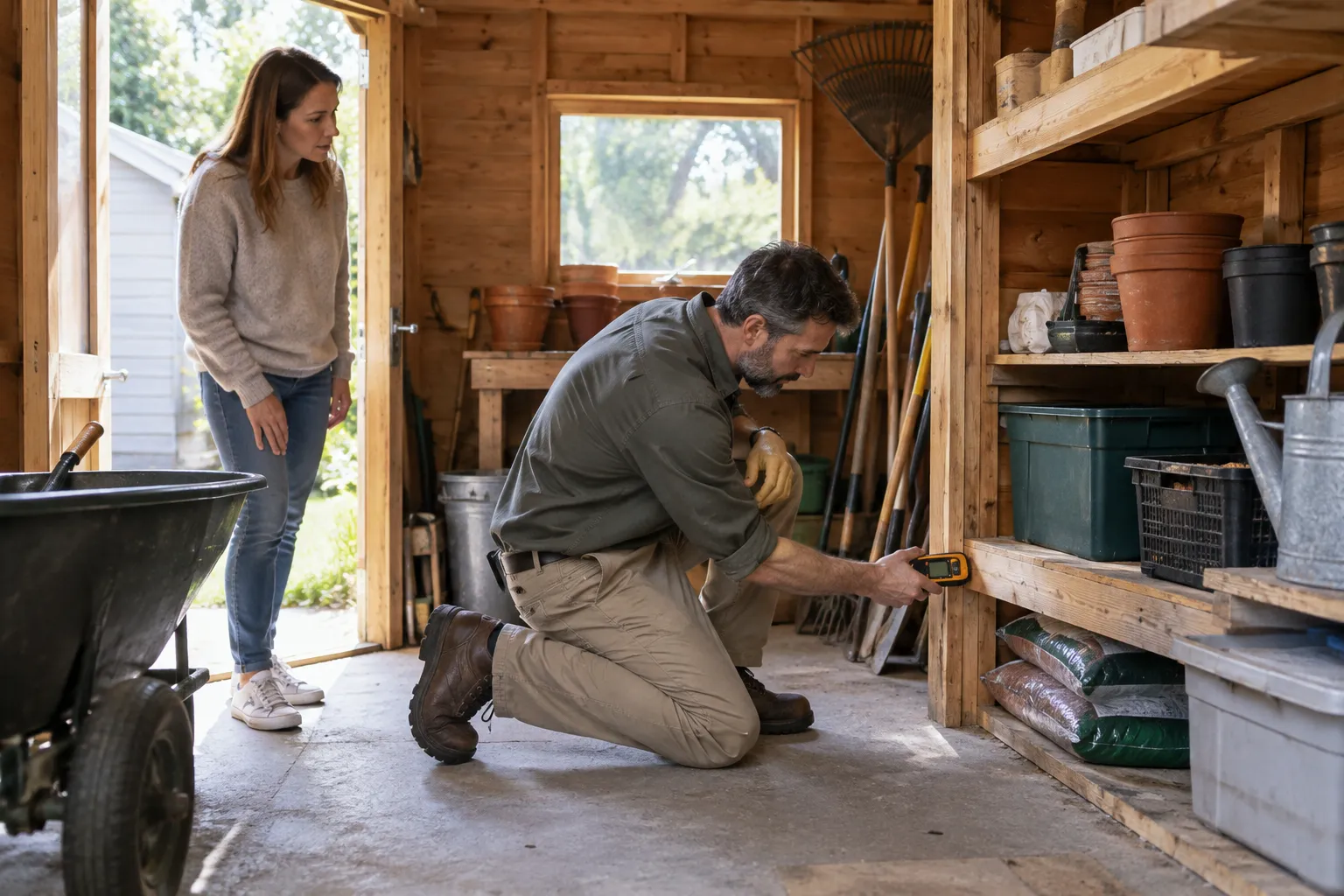
Common questions
Should I wait until I see more than one sign?
Not necessarily. A single change can be worth discussing if it is new, recurring, or in an area that is difficult to assess. Several observations may give a provider more context, but waiting for a particular number of clues is not a reliable rule. Record what you have noticed and ask whether an inspection is appropriate. The answer depends on the property and the details, and an inspection is needed to assess the cause.
Can a photo tell me whether termites are active?
A photo can help show the location and visible appearance, especially if you take it from a consistent angle over time. It usually cannot establish what caused a mark, whether activity is current, or what may be concealed behind a surface. Share the image as context, not as a diagnosis. Avoid scraping, opening, or removing material to get a clearer picture; describe what is visible and ask a professional what should be checked.