
Termite Swarmers Indoors: What Information Helps a Provider Assess the Situation?
Indoor winged insects can be difficult to identify from a quick glance. Record where and when you found them, what they looked like, whether wings or other signs were present, and any relevant property history. Clear observations and photos can help a pest control provider decide what to ask and what areas may need inspection, but they cannot confirm an infestation on their own.
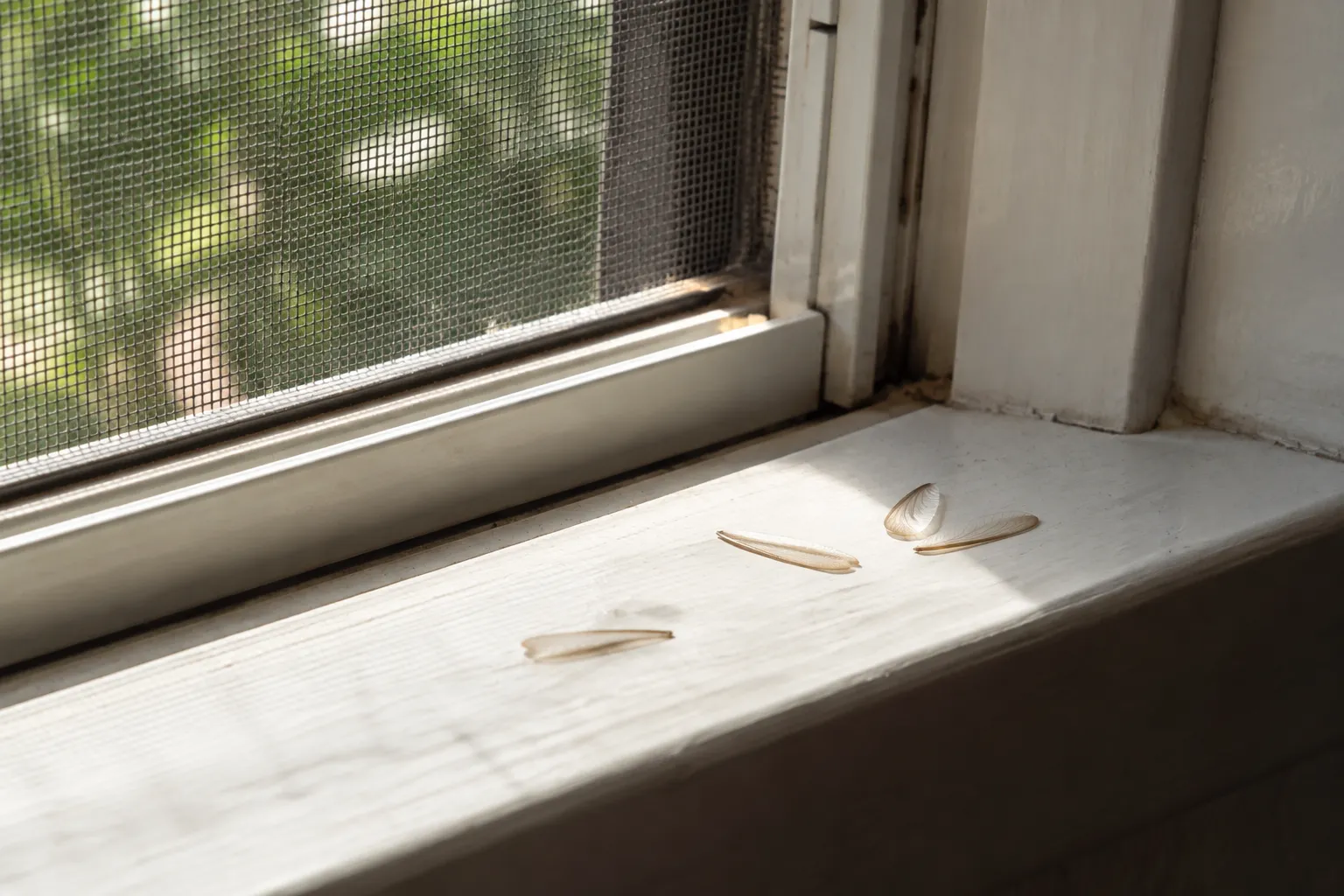
If you find winged insects indoors, share their location, date and time, approximate number, appearance, and any photos or shed wings with a termite control provider. Note whether you saw them once or repeatedly and whether there are other visible signs nearby. These details help guide a conversation, but identification and the need for treatment require a property-specific assessment.
Start with the place and timing
Write down the date and approximate time you noticed the insects. Add the room or area, such as a window, doorway, basement, or light fixture, and say whether they were on a sill, floor, wall, or another surface. If you found them in more than one place, list each location separately rather than describing the whole home as one area.
Describe what was happening when you noticed them: for example, whether a window or door had recently been open, or whether you saw insects gathering near a light. Treat these as observations, not explanations. A single indoor sighting does not establish where the insects came from, whether they are termites, or whether a colony is present.
- Date and approximate time
- Room and precise spot where they appeared
- Whether the observation was isolated or repeated
- Any nearby doors, windows, or lights you noticed
A location-specific note is more useful than a general description such as “bugs in the house.”
Describe what you saw without guessing
If you can do so without handling the insects, note their approximate size, color, and whether wings were visible. Record whether you saw insects with wings, insects that appeared to have shed wings, or both. Avoid relying on one feature to identify them: winged ants and termite swarmers can be confused, and a brief view may not show enough detail.
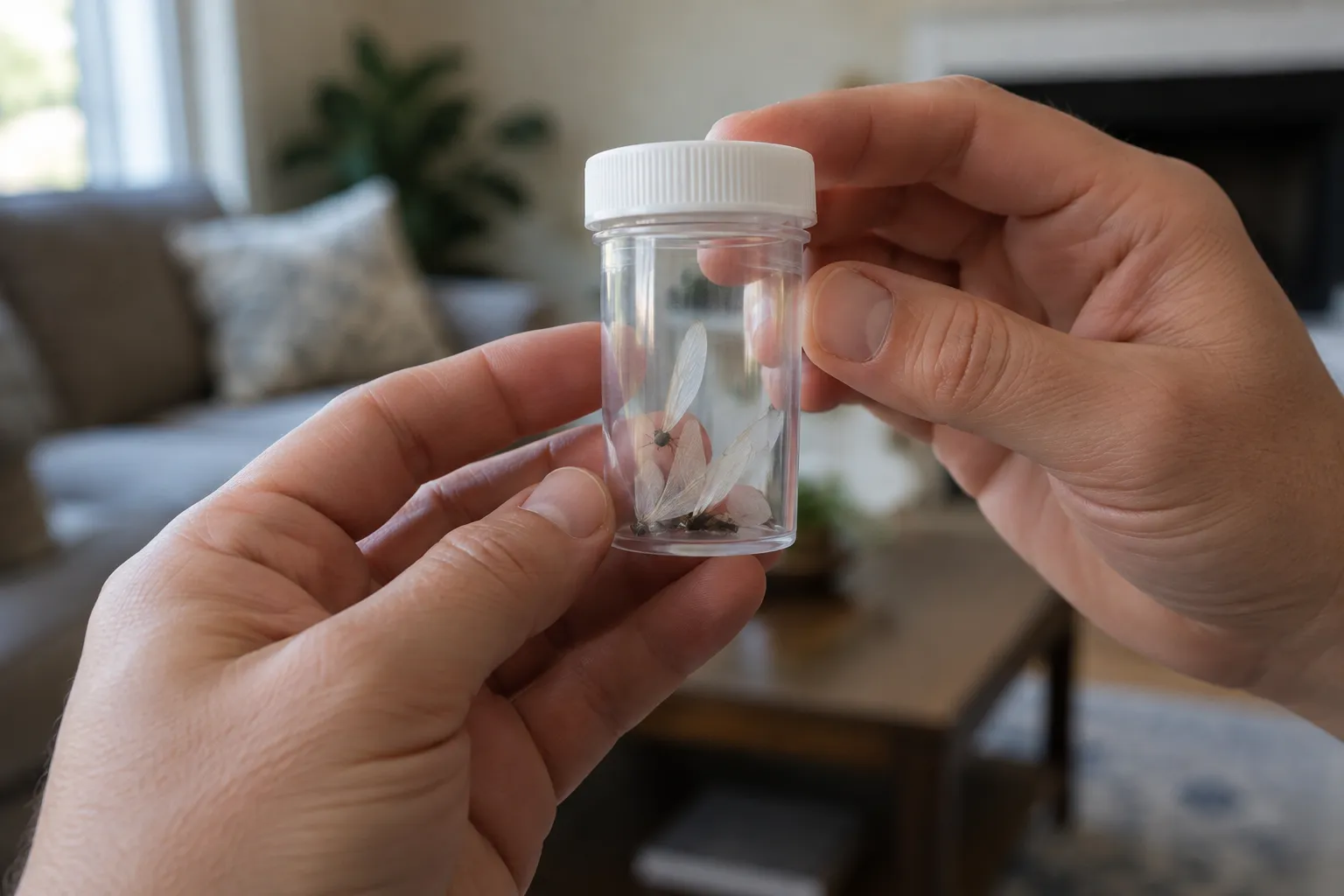
Take a clear photo if possible. A close view can show body shape and wings; a second photo from farther back can show the insects in relation to the window, wall, or other location. Keep the original image and note where it was taken. If the insects are gone, a photo of shed wings or the area where they gathered may still help explain what you observed, but it is not a definitive identification.
- Photograph the insect or shed wings in focus, if available.
- Include a wider view that shows the location.
- Note visible features rather than labeling the insect as a termite.
- Keep the date and location with the photos.
Photos support a discussion; they do not replace an inspection when one is appropriate.
Mention other nearby observations
Keep separate notes for separate dates. For example, if you see insects near one window on Monday and find loose wings in another room later in the week, record both events independently. This illustrative example shows how a simple timeline can clarify what happened without implying that either observation confirms termite activity.
If you are unsure whether something is relevant, include a brief, factual description and let the provider assess its significance. Avoid cleaning away or moving evidence solely to make a better photo; simply document what is visible and ask what, if anything, should be preserved for the inspection.
Share context as context, not as a diagnosis.
Ask what the assessment will cover
Before deciding on any proposed work, ask what the inspection found, what areas the recommendation addresses, and what preparation or follow-up is relevant to that specific plan. If the assessment remains uncertain, ask what additional observation or inspection would help clarify it. The next step can vary with the evidence and property conditions.
For an overview of the company’s termite control service, review the service information and use the [contact form](https://multipestnewyork.com/contact.html) to describe what you noticed. Multi Pest provides pest control across Long Island and New York City; the appropriate assessment and next step depend on the property.
Bring observations and questions; let the provider assess what they mean.
Common questions
Can a photo confirm that the insects are termites?
A photo may help a provider discuss visible features, but it may not show enough detail for a reliable identification. Winged ants can be mistaken for termite swarmers, and image quality, angle, and scale matter. Share the original photo along with where and when you found the insects. A provider can explain whether an on-site assessment is needed.
Should I keep the insects or shed wings?
Do not handle them just to collect a sample. If insects or wings are already visible and you can photograph them without disturbing the area, record what you see and where. Ask the provider whether they want any material preserved or whether photos are sufficient for the initial conversation. The answer can depend on the condition and what is available.